Type Posters
Manga Dossier Blueprint Poster
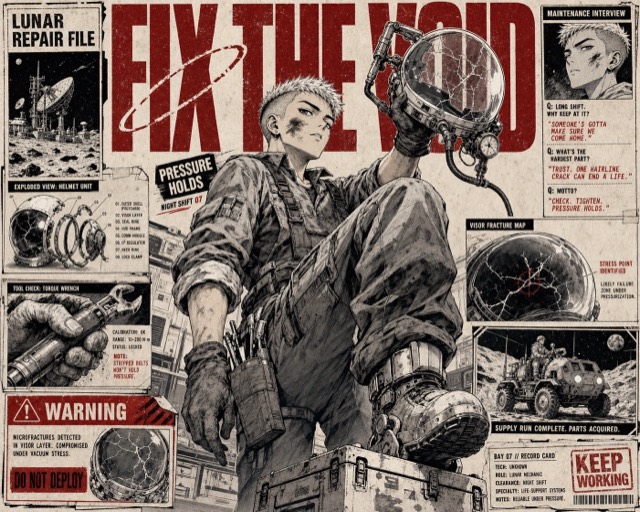
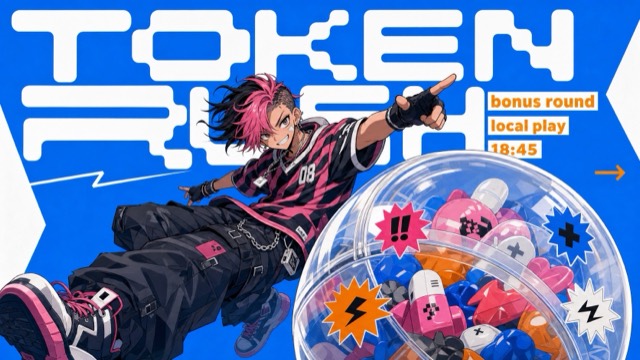
A distressed manga character-dossier poster system with cream paper margins, oversized condensed typography, grayscale ink hero portraits, cobalt-blue technical panels, cyan kinetic effects, small inset frames, catalog labels, and editorial annotation rails.
Images are AI-generated with this style's prompt. Your results will vary by model and the details you enter.
Build your prompt
Fill in the details below, or leave them blank and the AI will choose what fits the style. Prompts stay in English because image models understand it best; the text you want shown on the image can be in any language.
Gemini and some tools cannot take a prompt from a link, so press Copy prompt first, then paste.
Full style rules
Style anchors
- Layered editorial dossier layout with a dominant grayscale manga ink portrait, a smaller dynamic full-body figure, boxed inset panels, narrow annotation rails, and asymmetrical negative space.
- Warm off-white paper base with visible speckles, scuffs, worn ink, photocopy grain, and distressed screenprint edges.
- Limited palette led by charcoal black, cool grays, deep cobalt blue, desaturated navy, and bright cyan accents; color appears in panels, type, and kinetic energy marks rather than full-scene realism.
- Oversized condensed all-caps sans-serif headline blocks with weathered ink texture, stacked title hierarchy, and compact microcopy labels in small uppercase type.
- Manga/anime illustration treatment with confident black linework, crosshatching, cel-shaded grayscale faces, angular hair or clothing shapes, and crisp contour drawing.
- Large flat cobalt rectangle or blueprint panel behind the subject, often with faded technical symbols, diagram marks, stripes, rulers, or registration ticks.
- Cyan hand-painted energy, smoke, splash, ribbon, or wind strokes sweeping across the foreground and partially wrapping the smaller figure.
- Catalog-card details such as number boxes, small badges, short profile paragraphs, thin rules, side labels, and compact emblem-like symbols.
- Poster reads like a collectible profile sheet or tactical character card, dense but still controlled, with strong left-to-right title/portrait hierarchy.
- Flat print lighting with high contrast, no photographic depth of field, no glossy 3D rendering, and no cinematic lens effects.
Do
- Use weathered condensed headline type, number boxes, small metadata labels, and vertical annotation rails.
- Include at least one grayscale portrait, one smaller dynamic figure or object vignette, one cobalt blueprint panel, and cyan kinetic strokes.
- Use aged paper grain, ink distress, scuffed blue blocks, halftone gray, and rough screenprint edges.
- Change all names, symbols, props, narrative roles, and story premises for each generated sample.
Avoid
- Avoid pirate imagery, phoenix flames, skull marks, franchise logos, source names, signatures, and recognizably similar character features.
- Avoid photorealistic portraits, 3D renders, glossy gradients, cinematic bokeh, app UI cards, and smooth vector poster minimalism.
- Avoid cluttered full environments, modern advertising price labels, platform watermarks, QR codes, and creator IDs.
- Avoid using generic anime fan-art composition without the editorial dossier typography and print metadata system.
Negative prompt
photorealistic portrait, 3D render, glossy game art, smooth vector minimalism, soft gradients, cinematic lens flare, heavy bokeh, realistic full environment, pirate imagery, phoenix bird, skull-and-crossbones, franchise logo, copied anime character, copied source text, signature, watermark, username, QR code, platform logo, exact source layout tracing