Editorial + Minimal
Monochrome Tech-Grid Editorial
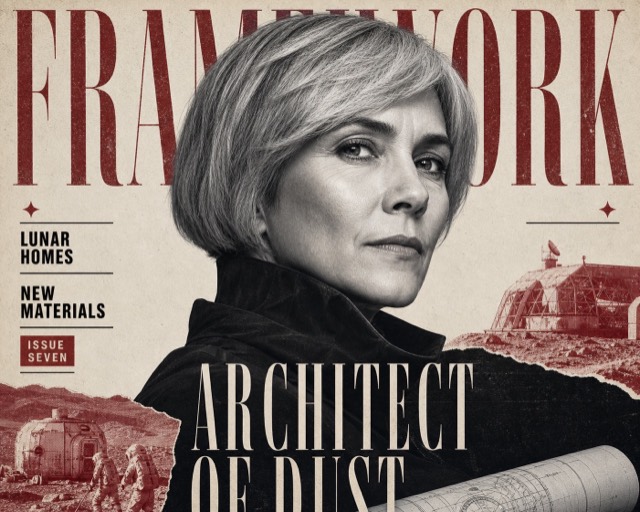
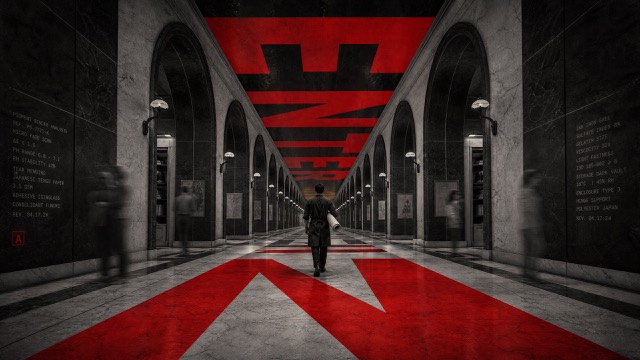
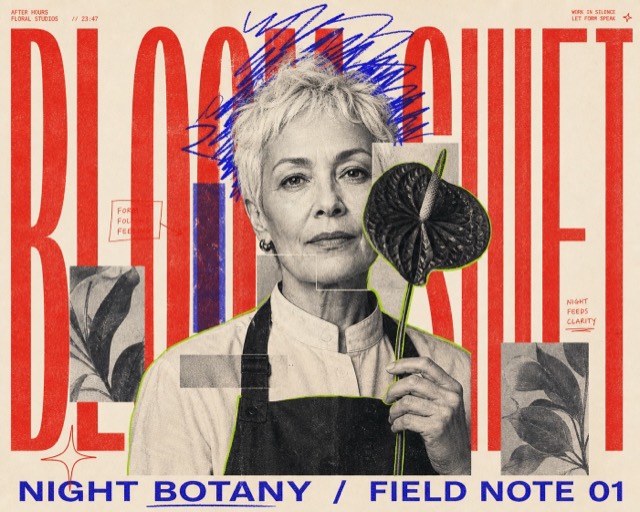
A severe black-and-white editorial poster system that combines an oversized compressed headline, a dense modular field of technical micro-information, and one documentary photograph cropped with monumental scale. Off-white paper, distressed ink, thin rules, registration motifs, and a restrained safety-red accent make the layout feel like an experimental identity manual crossed with an archival industrial contact sheet.
Images are AI-generated with this style's prompt. Your results will vary by model and the details you enter.
Build your prompt
Fill in the details below, or leave them blank and the AI will choose what fits the style. Prompts stay in English because image models understand it best; the text you want shown on the image can be in any language.
Gemini and some tools cannot take a prompt from a link, so press Copy prompt first, then paste.
Full style rules
Style anchors
- One immense black grotesk headline dominates the uppermost layer, tightly tracked and cropped close to the outer edges.
- A rigid Swiss-influenced modular grid of thin black rules divides the information zone into many unequal technical panels.
- The layout is intentionally dense yet disciplined, with tiny metadata contrasted against a single oversized word and a single oversized photograph.
- One high-contrast black-and-white documentary photograph occupies roughly the lower half in portrait formats or the dominant right/lower field in landscape formats.
- The photographed subject is cropped boldly at the frame edges and seen from a straightforward eye-level or slightly low documentary viewpoint.
- Typography combines an ultra-bold neo-grotesk display face with neutral small sans-serif labels and monospaced technical microcopy.
- The palette is approximately 88 percent warm off-white, 10 percent charcoal black, and 2 percent controlled accents led by safety red with optional tiny yellow-blue calibration chips.
- Graphic grammar uses bar-like data bands, registration crosses, coordinate diagrams, outlined cells, arrows, serial numbers, and hatched warning blocks, but no scannable codes.
- Surfaces carry subtle photocopy grain, rubbed black ink, fine paper fibers, and slight analog misregistration while all important type remains readable.
- Lighting in the photograph is flat overcast or hard practical daylight, producing crisp tonal separation without cinematic color grading.
- The mood is utilitarian, archival, performance-minded, and quietly rebellious, like an experimental identity specimen sheet from an independent technical culture.
Do
- Use one short, forceful display headline with strong black mass.
- Use one authentic-looking documentary scene with a bold edge crop.
- Create plausible fictional metadata, serial numbers, coordinates, and revision labels.
- Balance dense micro-information with a few empty cells so the grid can breathe.
- Keep the whole artifact tactile, printed, monochrome, and editorial.
Avoid
- Do not recreate any rally car, race number, racetrack, racing driver, or sponsor-covered vehicle.
- Do not reproduce original names, slogans, numeric identifiers, notices, logos, barcodes, or QR codes.
- Do not use neon palettes, glossy gradients, glassmorphism, 3D rendering, or cinematic color photography.
- Do not scatter random decorative widgets without alignment or information hierarchy.
- Do not let grain, scratches, or generative text artifacts destroy headline and label readability.
Negative prompt
rally car, racecar, motorsport, racetrack, racing driver, door number 553, sponsor decals, TenSecond, T-023, original identity copy, copied layout modules, QR code, scannable barcode, watermark, signature, creator name, real logo, brand mark, glossy 3D render, neon palette, gradient, cinematic color photo, lifestyle advertising, scrapbook collage, chaotic UI, excessive glitch, heavy noise, text soup, illegible headline, distorted typography, fake paragraphs, fisheye, centered product cutout